Who doesn’t like a refreshing libation during an event, after a long day of work, or even while relaxing in the sauna? The Finns certainly do! The reverence of beer dates back centuries in Finland, even appearing in their national epic, the Kalevala.
However, Finland has one drink that stands apart from others- Sahti!
Origin of Sahti
Sahti is a traditional farmhouse ale brewed in Finland, with the earliest written record of its use dating to 1366. The record appears at a bishop’s funeral. However, the wreckage of a 9th-century Viking ship contained casks that resemble those used to brew sahti.
Uniquely, sahti is one of the oldest brewing styles still used today, preceded only by lambic from Belgium. Traditionally, women were the brewers in Finnish society, closely guarding their recipes. Daughters would inherit these closely guarded recipes from their mothers, keeping these secrets within the family for generations.
Although mainly a farmhouse ale, records indicate that Sweden imported sahti throughout the 16th century. The tradition of home brewing remained strong in Finland until the passage of the Prohibition Act in 1919. Ultimately, the country would repeal this act in 1932.
Sahti brewing regained its popularity in the 1980s, when the brewery Lammin Sahti began commercial production again. Eventually, in 2002, the EU granted Finland a protected designation of origin (PDO) for sahti, as the only Nordic country to brew this ale.
Brewing Methods of Sahti
Sahti differs from other ales in both its brewing method and its ingredients. What makes this beer stand apart is the flat, sweet, murky, and dark qualities of this farmhouse ale. In ancient brewing, wild yeast was a common ingredient to ferment this ale. While recipes were close family secrets, traditional ingredients include:
- Barley
- Oats
- Juniper Berries
- Rye
- Wheat
- Twigs
- Hops (sometimes)
- Wild or Baker’s Yeast
To begin the brewing process, ingredients boil into a “wort”, which is simply a non-fermented version of the end product. Once a “mash” forms, the fluid sifts through a traditional kuurna, a hollowed-out aspen log with juniper twigs or rye straws as a filter. Finally, a fermenting vessel stores the strained liquids until the ale is ready.
This process lacks pasteurization, making it unsuitable for long-distance transport. Furthermore, sahti possesses murky qualities, as twigs and straws don’t fully drain the wort’s mash.
In ancient brewing, wild yeast helped ferment the ale. However, modern brewers prefer using baker’s yeast over brewer’s yeast. Baker’s yeast often gives ale a banana aroma. In addition, the fermentation process leaves the beer less fizzy than others, making it an ideal drink for refreshment on hot summer days.
Importance of Beer Culture in Finland
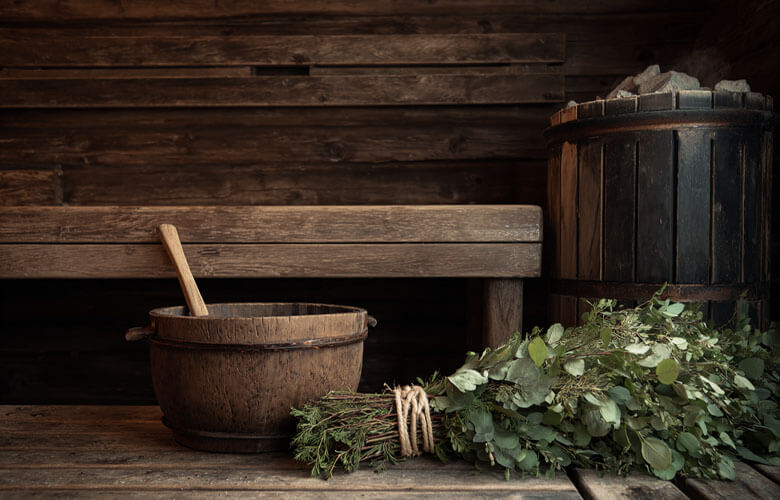
Drinking culture is an important facet of the Finnish lifestyle, and beer makes up part of this. Partaking in libations occurs during weddings, special events, meals, and even in the sauna. Olutsauna, literally translating to “sauna beer“, is a common way to relax during the summer months in Finland.
Finns consume 18.5 gallons of beer per capita annually, according to a 2022 study. In the same year, 111 microbreweries were recorded in Finland, bringing the total to 136 breweries across the country.
While beer culture likely dates back to the Viking Era, there are several mentions of beer throughout the runesongs of ancient Finland. Largely from the Karelian portion of Finland (southwestern Finland), the Kalevala details how beer brought communities together. While prohibition wiped out many breweries and home brewing practices in the early 1900s, the culture of beer drinking bounced back.
Although it is important to note that Finland has strict alcohol protocols in modern times, any beverage with an ABC over 8% (previously 5.5% until amended in 2024) is subject to strict regulations. This regulation means the typical Finnish beer sits between 4.2% and 5.2% ABV. While Alko stores can sell stronger beverages, grocery stores and other establishments have a limit to the alcohol they can sell.
Despite the affinity for beer, sahti is often hit-and-miss among Finns. Some prefer this uniquely Finnish ale, while others see it as a “bathtub swill.” It usually carries a reputation like how Americans view home-brewed moonshine.
Mentions of Beer Throughout the Kalevala
Barley is a significant crop throughout the Kalevala. In fact, in the creation myth, the world is complete when barley rises from the ashes of burned forests. This myth emphasizes the importance of barley to the Finns.
While sahti doesn’t come up by name in the Kalevala, the God of Agriculture, Pekko, receives worship for the harvest of barley and other staple crops. In the Kalevala, Osmotar is a character who brews the first beer for Ilmarinen’s wedding to Louhi’s daughter.
Surprisingly, there are nearly 400 lines of text relating to beer throughout the Kalevala. Of this, 200 describe the creation of the first beer. Notably, the ingredients Osmotar gathers for the first wedding beer include barley, yeast, hops, water, and honey.
Osmotar’s Creation of Beer
Louhi, the Mistress of Pohjola, seeks to find a formidable beer to accompany the meat slaughtered by the giant ox. A passing traveler refers Louhi to Osmotar, a renowned brewer, to accomplish this.
Osmotar starts by adding six barley kernels, seven hop fruit tips, and seven cups of water to a cauldron, bringing this to a boil. However, the ingredients fail to ferment to create beer. Desperate to find a fermenting agent, she employs the help of some animals.
First, a snow white squirrel gathers pine cones. But the pine cones fail to ferment the beer. Next, a golden-breasted marten gathers saliva from a sleeping bear, which also fails in fermentation. Lastly, a honey bee collects pollen for the brew. Finally, this successfully ferments the beer.