
Religious syncretism began thousands of years ago during the Hellenistic period, around 350 BCE. During this time, the Macedonian Empire expanded vastly under Alexander the Great. As such, cultures between Greece and India began to merge with each other. This is probably the earliest record of religious syncretism.
What is Religious Syncretism?
Religious syncretism occurs when cultures intermingle, blend, and fuse together. While there are a variety of reasons this can occur, some of the most common include:
- Conquest
- Trade
- Migration
- Colonization
When groups of people with different belief systems interact for extended periods of time, syncretism often follows. Syncretism doesn’t have to be religious by nature. Instead, cultural syncretism or hybridity also occurs as people of different cultural backgrounds coexist.
Which Religions are Syncretic?
Today, religious syncretism often involves offshoots of major religions such as:
- Christianity
- Judaism
- Islam
- Hinduism
- Buddhism
Furthermore, these syncretic religions are not isolated and occur throughout the world in various forms. As major religions spread, they often absorb local and regional belief systems. These instances result in the syncretic religions we know today.
African Syncretic Religions
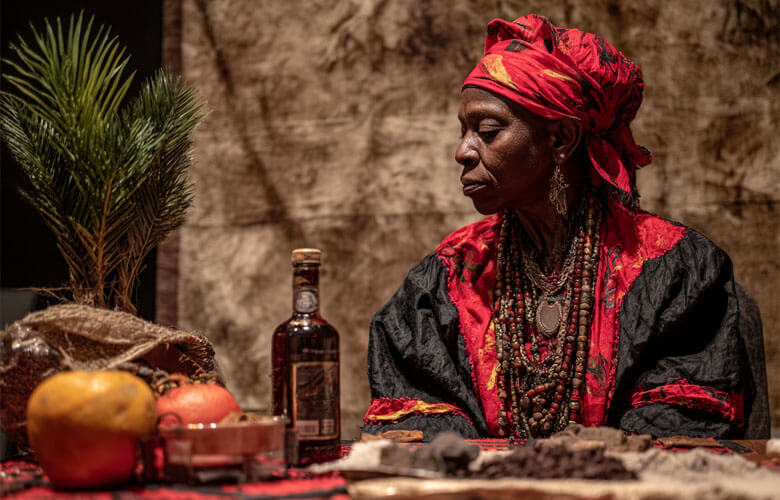
As enslaved people from Africa arrived in the “New World,” they often were forced to practice the religions of Europeans who controlled the lands. In these cases, syncretism was necessary to pass on the old beliefs. These are some of the African diaspora religions that developed in the Americas.
- Vodou – Originating in Haiti, this religion is a mix of Catholicism (Roman), Vodun (West Africa), and Caribbean indigenous beliefs.
- Santería – A Cuban religion stemming from Catholicism (Spanish) and Yoruba (West Africa).
- Candomblé – A mixture of Catholicism, African religions, Indigenous Brazilian traditions, and Spiritism.
Interestingly, beliefs in West Africa closely resembled those of the Catholics who inhabited the Caribbean and South America. This led to syncretism, which allowed enslaved and indentured people to practice their native religions under a masquerade of Catholicism.
Religions such as Vodou worship loas (lwas) who act as intermediaries for Bondye (God). Bondye is omnipotent yet distant from humans. As such, the loas act as emissaries, liaisons, and answer to the prayers of practitioners.
This belief in loas closely resembled the way Catholics venerate Saints. The loa in Vodou stems from the Vodun religion (from the Fon people) and Orisha (from the Yoruba) in Western Africa. When syncretism occurred in the Caribbean, loas were associated with corresponding Catholic Saints.
Asian Syncretic Religions
Asia has a massive variety of geography, wildlife, cultures, and beliefs. While major religions took root throughout Asia, regional areas held older traditions and beliefs. As cultures interact with each other, they combine elements of traditions and religion to form new belief systems.
Additionally, the Silk Road allowed commerce to flourish and nations to gain prosperity. Accordingly, the thriving trade route allowed cultures, beliefs, and religions to intermingle. These interactions led to syncretism in various parts of Asia as well.
Some of the most popular syncretic religions from Asia include:
- Sikhism – A blend of Islam and Hinduism, founded 500 years ago in India.
- Shinbutsu-shūgō – A fusion of Shinto and Buddhism from 7th-century Japan.
- Caodaism – A Vietnamese religion from 1926 that melds Buddhism, Confucianism, Taoism, and Christianity.
- Mahayana Buddhism – A fusion of Buddhism that comprises regional beliefs. This was largely popular in the Khmer Empire.
Throughout Asia, trade routes and regional beliefs led to a variety of syncretic religions, some of which lost popularity throughout the ages. However, religions such as Sikhism still remain strong in large populations today.
Other Syncretic Religions
Wherever cultures mingle, syncretism generally occurs. This can occur culturally (creolization), with religions, or even languages.
- Rastafarianism – Originating in Jamaica in the 1930s, this religion is a blend of Judaism, Christianity, Ethiopianism, and teachings from Marcus Garvey.
- Hoodoo – While not actually a religion, this is a spiritual belief system that incorporates aspects of Catholicism, Protestantism, Islam, Spiritualism, African spiritual beliefs, and Indigenous American botany.
- New Age Spiritualism – This popular belief system stems from Western and Eastern religions, paganism, and occult beliefs.
As access to information becomes more available, newer syncretic religions become more popular. Additionally, the popularity of these new belief systems stems from increased globalization and cultural intermingling.
How Pidgin Languages Undergo Creolization
Creolization is when new languages and cultures form from a mixture of ethnic groups. Typically, a pidgin language first forms when two groups of people interact who do not speak the same native language. Most cases of pidgin languages come about through colonization or trade interactions.
While pidgin languages arise from a necessity to communicate, creolization is a longer process where a language permanently forms for a group of people. This process undergoes the following steps:
- Creation of Pidgin – Pidgin languages form as a means to communicate between people of different cultures and language backgrounds. Pidgin uses basic vocabulary and grammatical structure to serve as a means of communication.
- Nativization – As pidgin is spread to children, they grow up with it as a native language. Often, pidgin-speaking children use this as a first language to communicate with others.
- Expansion – As pidgin becomes a native language, vocabulary and grammatical structure expand. This leads to a more robust language that can express more nuanced ideas, values, and emotions.
- Creole Formation – As expansion shapes the language, creolization takes over and forms a brand new, distinct language. The language takes root in the population of people and becomes a regional communication system.
Popularity of Cultural Hybridity
Cultural hybridity, the mixing of cultures and belief systems, is a phenomenon becoming more popular in recent years. These are some of the factors causing this:
- Globalization
- Digitalization
- Diaspora and Migration
- Social Media
Traditionally, cultural hybridity arose from migration, trade, conquest, and colonization. When people physically relocate to new regions, the cultures from their old homes merge with those of their new homes.
But today, an interesting phenomenon is occurring with the increase in technology, social media, and other media outlets. Digitalization has created a platform where cultural beliefs can spread through online communication. This has vastly impacted cultural hybridization. In addition, it helps to amplify the voices of populations that otherwise may not have had widespread reach.
Connection Between Haitian Vodou and Haitian Creole
The formation of Haitian Creole arose in the 17th century as enslaved people from West Africa reached Saint-Domingue (modern-day Haiti). Many of the Africans did not speak the same language.
French-based Creole eventually formed to facilitate communication between the West Africans and French colonists. In a similar fashion, Haitian Vodou formed as a syncretic religion in the Caribbean island. Vodou was a significant way for Haitians to practice their traditional beliefs while masquerading as Catholic Saint veneration.
“Langaj” is the name of the sacred form of Haitian Creole that is used to say prayers, invoke loas, and conduct rituals in Haitian Vodou. The loas were typically portrayed as a patron Saint in Catholicism. By “venerating” these saints, Haitians were able to worship the loas.
While Vodou, as a syncretic religion, came about as a necessity, it is still embraced as a rich part of Haitian culture and history to this day.