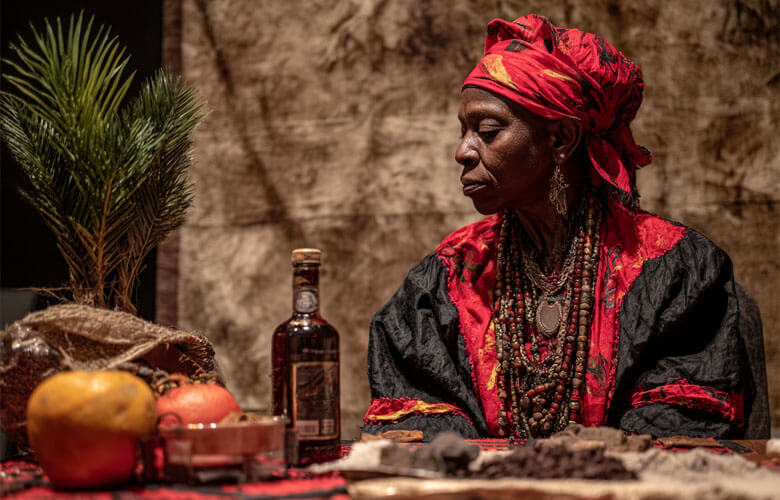

Clairin is a spirit that is venerated throughout the Caribbean and has close ties with Vodou traditions. It is a clear liquor distilled from sugarcane juice. However, this typically undergoes a single distillation instead of multiple distillations, like other rums.
Origins of Clairin Rum
Clairin originates in Haiti; its name translates to “clear” in French-Haitian Creole. Enslaved Haitians began brewing this spirit over 200 years ago. This spirit gained popularity after Europeans brought stills to Haiti in the mid-1700s.
However, its popularity emerged after the Haitian Revolution between 1791 and 1804. Afterwards, Europeans pulled out of Haiti, meaning the country did not go through a period of industrialization. Therefore, instead of brewing rum with sugarcane molasses, like the modernized rum we know, Haiti preserved its methods of using cane juice.
Because of all this, clairin is considered the “Grandfather of Rum.” While not the oldest method of rum production, it is one of the few that has preserved its traditional authenticity.
Difference Between Rum and Rhum
Rum is a broad category of spirits distilled from sugarcane. However, what most people consider “traditional” rum typically comes from sugarcane molasses. Rhum, on the other hand, sometimes called “rhum agricole,” is distilled from fresh sugarcane juice. The word “rhum” derives from the French spelling.
So as it stands, all rhum is rum, but not all rum is rhum. Technically, clairin falls under both categories and can be listed as either. Comparatively, rhum agricole is traditionally distilled in stills, while clairin is generally distilled in open-fired pot stills.
Clairin Signifies Haitian Cultural Identity
Clairin is deeply rooted in Haitian society. It is the traditional drink of the Haitian people and represents their historical, spiritual, and national identity. Likewise, the spirit symbolizes independence and resilience, as it is considered an artisanal distillation technique.
Since this spirit doesn’t require modern stills, its popularity surged after the Haitian Revolution. Prior to this, it was a common offering in Vodou rituals and ceremonies. Clairin carries a significant expression of “terroir,” with each region of Haiti having a unique blend of this spirit.
Furthermore, keeping the old production process symbolizes the resilience of Haitians. Their nondependence on the industrialized distilling methods makes clairin a symbol of independence. Thus, it has become a source of pride for many Haitians.
Significance in Vodou Traditions & Rituals
Clairin plays a significant role in Vodou rituals and traditions. It is often the beverage of choice when making offerings to the loa. It is also used to make offerings for ancestors and the dead.
Additionally, houngans and mambos (priests and priestesses) use clairin to purify spaces, altars, and people during Vodou rituals and ceremonies. Often, they sip this spirit and spray it as a fine mist among followers.
Moreover, clairin is often sprinkled or poured over a vèvè for a loa. This gesture activates the vèvè, thus invoking the spirit of the loa for a ceremony. It may also be sprinkled on an altar, or sometimes it is left as an offering upon altars during Vodou ceremonies.
A Drink for the Common People
Due to the ease of distilling and economic production of clairin, the drink became the “go-to” for the peasant class. While Europeans preferred wine and imported spirits, most Haitians had to turn to clairin as their drink of choice.
As enslaved or oppressed people, religious syncretism between Catholicism and traditional West African religions led to the rise of Vodou. Loas were associated with similar saints, thus allowing Haitians to continue practices with the masquerade of following Catholicism.
Clairin represented the struggle of the lower class, contributing to its prevalence in Vodou practices. Untouched by modern industrial distilling techniques, the spirit represents the pure and raw nature of rhum.
Modern Usage of Clairin
Clairin was once thought of as “Haitian moonshine.” It was not a beverage many in the rest of the world sought after. However, as the Haitian community spreads and mixology adapts, this spirit is gaining popularity for cocktails and rum enthusiasts.
Clairin is generally served neat, with water, or in cocktails. The neat version allows enthusiasts to experience the unique terroir of the batch. It often has a grassier taste than traditional rum. It is also used as a substitute in cocktails that are traditionally served with rum.
However, due to its distinct flavor profile, mixologists are inventing new and unique cocktails to serve with this spirit. Some of these include:
- Funky ti’ Punch
- Clairinha
- Clairin Regal Sour
- Clairin Drop
- Port au Prince
- Port Creole
- Jemanjà
- Aguamiel
- Sekonsà
- 96 Tears
Today, there are more than 500 distilleries of clairin throughout the Haitian countryside. In each region, there are unique flavor profiles due to the terroir makeup (environment, soil, topography, and climate).
Future of Clairin in Modern Markets
While many mixologists like experimenting with new and unique recipes, they often turn to traditional spirits to create an experience. This is good for the overall market, but it also poses the threat of modernizing the distillation methods of this time-honored spirit.
Furthermore, there is a threat that big corporations may try to take over and saturate the market. This could potentially devastate the cultural experience of this uniquely Haitian beverage.
Despite these threats, distilleries in Haiti are working to preserve the traditions of clairin production. Additionally, some are producing aged versions, called Vieux Clairin, transforming this spirit into a high-end sipping beverage.
Regardless of the evolution of clairin, this beverage still remains “The Spirit of Haiti.”
Related Articles