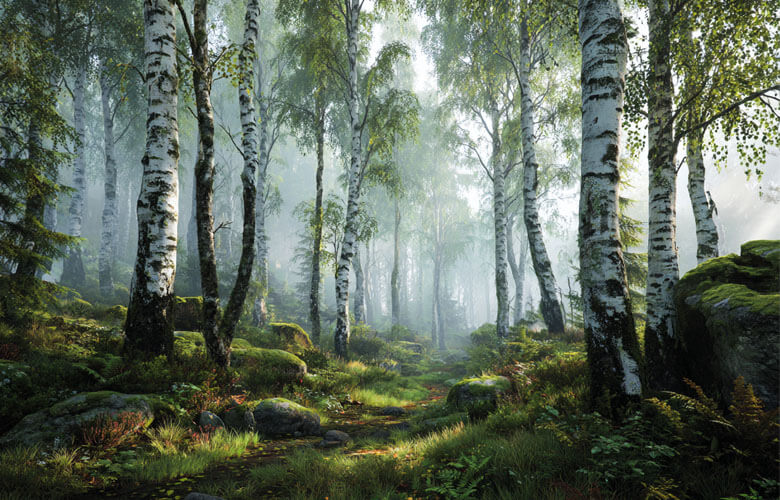
Experiencing nature provides clarity, serenity, and relaxation for those seeking to escape the bustling world of technology. However, in many countries around the world, natural spaces are walled off or contained within private land, no-trespass zones, or government-owned facilities. In Finland, the concept of jokamiehenoikeus, or “everyman’s right,” allows people the right to roam and enjoy nature so long as they respect it.
Jokamiehenoikeus Explained: Finland’s Everyman’s Right to Roam
Jokamiehenoikeus (everyman’s right), also called jokaisenoikeudet (everyone’s right) in modern days, is the term Finns use to describe the right to roam freely. Under this principle, Finns can enjoy, explore, and camp on land even if a private citizen owns the land. Of course, this does not allow a person to exploit the land, and it comes with some regulations attached.
Some describe this philosophy as “the right to roam” and as a fundamental ideology for Finns. The right to experience nature belongs to everyone in Finland, and landowners should not have the right to restrict people’s enjoyment of it. One of the fundamental concepts of the “right to roam” is the principle of “leave no trace.” Leaving the wilderness the way you found it ensures that others can properly enjoy the area, instead of having to clean up after you.
Leave No Trace Principles
As a part of jokamiehenoikeus, the principle of “leave no trace” means to leave things as you found them in the wilderness. While foraging is acceptable, you should not harm plants, habitats, or ecosystems in the process. Preserving nature is imperative to the Finnish way of life.
When hiking or camping, you should carry an empty bag to pick up your litter. Avoid leaving biodegradable waste, such as fruit peels, coffee grounds, or leftover food. Furthermore, dispose of trash in proper storage containers (e.g., recycling, waste, etc) when you exit the wilderness. It is also highly encouraged to pick up litter others may have left behind if you encounter it.
When gathering firewood or other resources, do so responsibly and respectfully. Don’t strip bark from trees! Look for pieces of dead wood, as it is not permitted to fell trees or gather live branches for this purpose. Lastly, only start fires in permitted areas. Avoid lighting fires on private land or outside of nuotiopaikka, campfire sites.
What Are the Rules of the “Right to Roam”?
While Finland and some other European countries have the philosophy of “everyone’s right,” this doesn’t mean people can do whatever they want, particularly on private land. There is a set of guidelines that ensures that enjoying nature doesn’t disrupt landowners.
What am I allowed to do under jokamiehenoikeus?
Enjoying nature safely and respectfully is allowed under jokamiehenoikeus. These actions include:
- Roaming freely: walking, cycling, skiing, or riding horses on private property.
- Camping: travelers are allowed to camp on private land so long as they respect nature and the landowner’s privacy.
- Foraging: gathering wild berries, mushrooms, and herbs is largely accepted under “the right to roam.”
- Hunting and fishing: using a rod and line is allowed; however, net fishing or the use of traps is prohibited.
What does jokamiehenoikeus prohibit?
Actions or behavior that can damage nature, exploit natural resources, or invade a landowner’s privacy are not allowed. These actions include:
- Motorized vehicles: vehicles with motors can cause both environmental and noise pollution.
- Building campfires: unattended fires can pose a risk of damaging the landowner’s property.
- Collecting owned resources: including trees, crops, and other managed resources on the land. Furthermore, individuals cannot gather lichens, moss, or soil on private land. Gathering these organisms or resources can damage the ecosystem, as lichens are symbiotic organisms with a slower life cycle.
Is Jokamiehenoikeus a Law or Just a Rule?
The short answer is both! While jokamiehenoikeus is generally considered an unwritten law, its concept is grounded in Finnish law. While there are dozens of pieces of legislation that encompass what you can do in nature, these 5 main laws largely define the “right to roam.”
- Penal Code (Rikoslaki): The Finnish Penal Code imposes criminal penalties for offenses such as theft, disturbing the peace, and mischief.
- Nature Conservation Act (Luonnonsuojelulaki): This Act restricts the “right to roam” in specialized nature reserves and sets regulations on protected species, breeding and nesting, and environmental damage.
- Water Act (Vesilaki): This Act defines how individuals can navigate, swim, and anchor in waterways throughout Finland.
- Land Use and Building Act (Maankäyttö-ja rakennuslaki): Limitations to the “right to roam” are described in this Act based on zoning laws, private restrictions, protected areas, and developments.
- Forest Act (Metsälaki): The Ministry of Agriculture and Forestry restricts activities in protected habitats, areas undergoing forestry work, and damage to trees and other sensitive organisms.
The Origins of the Right to Roam
Despite being supported by modern laws, jokamiehenoikeus is a social contract dating back to ancient times. In Finland, particularly, survival often depended on foraging, hunting, and fishing. The right to travel through lands was socially acceptable.
Forests were a communal resource before the industrial era. In medieval Finland, serfs owned the lands they farmed for the king of Sweden. Unlike other parts of Europe, these serfs didn’t report to a local lord, but rather to the crown itself. Because of this ownership system, trespassing on lands wasn’t frowned upon. Furthermore, the Erämaa System (Wilderness system) existed before the nation became predominantly agrarian. Erämaa, or wilderness, was a communal resource that allowed Finns to earn a livelihood through seasonal hunting, foraging, and fishing.
As modern property rights took hold in the 19th and 20th centuries, these values carried on. Even after passing the Agrarian Reform of 1918, which largely expanded private land ownership, the right to roam persisted.
How did Agrarian Reform Influence the Right to Roam?
While many other countries around the world rely on companies to produce agriculture, the 1918 Agrarian Reform in Finland allowed tenant farmers to own the land they tilled. Creating smallholdings around the nation meant corporations could not monopolize large swathes of land. This transition helped to ensure that the concept of jokamiehenoikeus could persist in modern Finland.
The “elite class” didn’t own the lands used for farming. Keeping land in the hands of the working class prevented the widespread use of “no trespassing” signs and restricted access to everyday Finns.
Why Does “Everyman’s Right” Work in Finland?
Finland has a deep cultural respect for nature. Their school systems even reflect this veneration, using nature as a learning environment for students. The relationship with nature, or luontosuhde, is taught to children as early as preschool. Finns are instilled with the values of nature from parents, education systems, and the government from an early age. Because of this, a deep respect for nature promotes conservation and preservation of ecosystems. Furthermore, the principles of “leave no trace” are heavily ingrained in the Finnish ethos.
Reliance on nature is inextricably woven into the cultural DNA of Finns. Even in the age of technology, Finns still rely on nature to unwind, relieve stress, and contemplate innovations. This concept, combined with the lack of a rigid feudal system, allows Finns to respect natural environments fully and what they offer, rather than seeing them as “someone else’s land.”
What Other Countries Have the Right to Roam?
The “right to roam” is not a uniquely Finnish concept. Other countries around the world embrace the principle that enjoying the wilderness is a basic human right. Nordic countries have the fewest regulations on the right to roam, along with Scotland.
Countries with extensive freedoms in the wilderness include:
- Finland
- Iceland
- Norway
- Sweden
- Scotland
Countries with broadly protected rights to roam:
- England
- Wales
- Austria
- Latvia
- Estonia
- Czech Republic
- Switzerland
- Lithuania
- Belarus
Cultural Significance in Finland: A Nation of Foragers
Foraging is a common pastime in Finland, particularly during the autumn months. This activity not only serves as a hobby or a source of food; it has also become a form of meditation for Finns. Connecting with nature helps a Finn relax, regardless of what their day job may entail.
While some rely on foraging to supplement food sources, urban-dwelling Finns use it as a sort of “escape hatch” to leave the day-to-day bustle of the city. During midsummer, for example, many Finns leave the capital, Helsinki, to retreat to their summer houses. There is a noticeable difference in traffic patterns in the larger cities during these times.
Benefits of Everyman’s Right in a Modern World
As urbanization increases and development encroaches on the wilderness, Finns in the modern day crave the connection with nature they grew up with. It serves as a means to promote physical and mental health through exercise, mindfulness, and meditation.
With this connection to nature through jokamiehenoikeus, Finns can learn the value of nature, how to respect it, and how to ensure the resources remain for future generations. As an added benefit, they can enjoy the silence nature brings, which is a huge perk for many Finns!
Ready to Explore the Wilderness?
Before exercising the “right to roam,” it is important to research local regulations. Ensure that your travels do not encroach upon protected areas, be aware of possible dangers you may encounter, and ensure you “leave no trace” as you explore the wonders of the wilderness.
5 FAQs About the Right to Roam
Can I camp anywhere under the right to roam?
No. While the right to roam grants broad freedoms, you cannot camp in cultivated lands, protected areas, restricted zones, city limits, near roadways, or within sight of private homes.
Is there a time limit on camping under the right to roam?
While there is no set time limit, generally one or two days is acceptable. Staying for more than 3 days is often frowned upon, particularly on private land.
What are the most popular outdoor activities in Finland?
Finland allows the right to roam, which promotes a wider range of outdoor activities. Some of the most popular outdoor activities include foraging, hiking, camping, cross-country skiing, kayaking, canoeing, paddleboarding, and cycling.
Do you have to be a Finnish citizen to enjoy the right to roam?
No, Finland allows any resident or visitor to enjoy the right to roam. However, it is a good idea to understand local restrictions and standards before setting out for a wilderness excursion.
What can you forage under the right to roam?
Foraging for wild berries, mushrooms, herbs, greens, cones, and fallen branches is acceptable in the Finnish wilderness. However, you cannot forage lichens, moss, protected species, crops, cultivated plants, or soil. Lapland has a few higher restrictions, though. Cloudberries cannot be harvested during ripening seasons.
Related Articles