

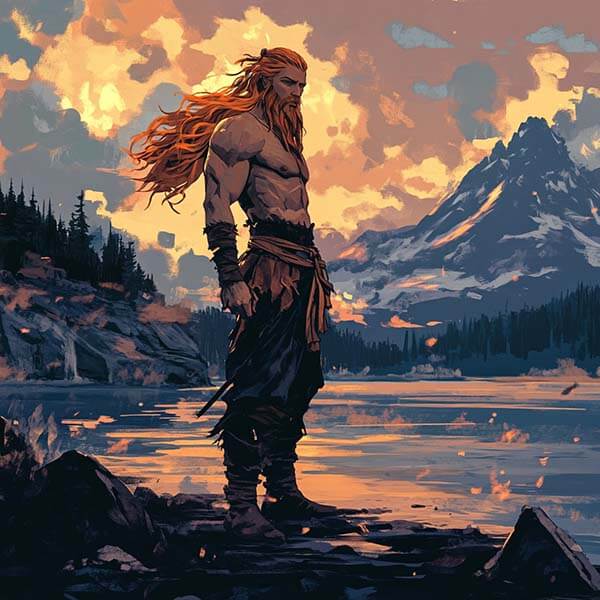
Lemminkäinen
Ahti Saarelainen – The Farminded
Hero of the Kalevala
Karelian / Finnish Mythology
Lemminkäinen is the youngest of the three main heroes in Kalevala. He is reckless, handsome, charismatic, brave, and romantic. Although fearless, his demeanor often leads to reckless actions that get him in trouble.
Lemminkäinen’s stories revolve around love, death, and courageousness. His spirit of adventure leads him to quest into the lands of Pohjola and Tuonela.
His mother refers to him as Ahti Saarelainen, which refers to his homelands in the island region of Kalevala.
Nicknames
- Wanton Lemminkäinen
- Ahti Saarelainen: Ahti the Islander
- Kaukomieli: The Farminded
Lemminkäinen’s Characteristics
Lemminkäinen is a hard-headed hero who often puts his pride above the dangers he faces. His stubbornness and impulses lead him into adventures, while his courage and quick wit help him overcome them.
Charismatic Loverboy – The motives of Lemminkäinen often revolve around romantic pursuits. As a handsome, young, and strong warrior, his ambitions lead his decisions. Wanton Lemminkäinen is willing to travel great distances for love and admiration.
Reckless Bravery – Lemminkäinen has an immense ego, as he perceives himself as invincible. He often ignores the warnings of others and is quick to set foot in dangerous situations. This recklessness eventually leads to his death at the hands of the Swan of Tuonela and his resurrection by his mother.
Stubborn – The stubborn nature of Lemminkäinen is one of frustration for his mother in particular. Even after his death and resurrection, he persists in traveling to Pohjola to attend the feast of Ilmarinen’s wedding.
Adventurous Spirit – Despite his negative traits, Lemminkäinen is willing to travel great distances to pursue fame, recognition, and ambition. His willingness to go to these lengths led to his nickname, “the Farminded.”
Lemminkäinen’s Family
Lemminkäinen’s family plays a central role in his adventures. He often ignores his mother’s advice while pursuing women and adventure.
- Parents: Unnamed. Lemminkäinen’s mother plays a significant role in his life and his adventures. His father is absent but mentioned briefly.
- Siblings: None
- Spouse: Kyllikki
- Children: None
Although Lemminkäinen marries Kyllikki, they ultimately have a falling out. Kyllikki promises not to go out dancing if Lemminkäinen doesn’t go to war. However, when she breaks her promise, he eventually leaves her to go to war in Pohjola.
Interactions
Kyllikki
Lemminkäinen’s story begins with his courtship of Kyllikki. She is a beautiful maiden from the northern parts of the Land of Kalevala. His charm and persistence eventually lead to their marriage. However, this marriage is fraught with difficulties from Lemminkäinen’s infidelity.
Lemminkäinen’s Mother
After his death at the hands of the Swan of Tuonela, Lemminkäinen’s mother seeks him out in Pohjola. Finding his dismembered corpse in the river, she sews him back together and brings him back to life.
Louhi
With his marriage to Kyllikki in shambles, Lemminkäinen travels to Pohjola to marry one of Louhi’s daughters. She gives him three trials, the last of which is to slay the Swan of Tounela. This previous trial leads to his death and rebirth.
The Swan of Tuonela
As the third trial from Louhi, Lemminkäinen must slay the Swan of Tuonela. During this quest, the herdsman of Tuonela slays Lemminkäinen. His limbs are dismembered and scattered across the lands of the dead.
Väinämöinen and Ilmarinen
Lemminkäinen, Väinämöinen, and Ilmarinen work together to steal the Sampo back from Louhi. Despite their failure to return the Sampo to Kalevala, this becomes one of the central stories.
Appearance
Kalevala describes Lemminkäinen as a handsome, young, charismatic warrior with a fiery red beard. His flowing golden hair and piercing eyes allure and captivate the women he courts. His physical traits include:
- Flowing golden hair
- Fiery red beard
- Peak physical prowess
- Well-spoken
- Noble garb
- Magnetic personality
Realms
Lemminkäinen’s travels lead him into perilous danger and mysterious lands. As a brash young warrior, his ego often sparks his sense of adventure. Especially when told not to do something, as was the case in his venture to Ilmarinen’s wedding, which he wasn’t invited to.
Frequently Asked Questions
Was Lemminkäinen married?
Yes, Lemminkäinen was married to Kyllikki; however, their marriage was rocky. The couple made an oath; Kyllikki couldn't go dancing in the village, in exchange, Lemminkäinen couldn't go to war. One day, when Lemminkäinen was out fishing, Kyllikki broke her vow to go dancing. In retaliation, Lemminkäinen left her to go to war in Pohjola.
Did Lemminkäinen have children?
No, Lemminkäinen and Kyllikki never had any children together. He was unsuccessful in gaining a new bride throughout the Runes of the Kalevala.
Why did Lemminkäinen leave Kyllikki?
Lemminkäinen felt betrayed by Kyllikki after the villagers convinced her to join them for a dance in the village. In a fit of anger, he deemed her untrustworthy and left her to Pohjola to go to war, thus breaking his oath with her as well.
What were Lemminkäinen's three impossible tasks from Louhi?
Louhi was a clever manipulator. When Lemminkäinen sought her daughter's hand in marriage, she bestowed him three nearly impossible tasks.
- Hunt the Moose of Hiisi: Lemminkäinen must first hunt the Moose of Hiisi (Hiiden hirvi). The creature, created by a Hiisi (demonic-like forest spirit), possessed supernatural speed. Lemminkäinen gave chase to the beast on his skis, eventually capturing it. However, the chase caused tremendous chaos in local villages as the moose trampled through. This saga represents a sacred winter hunt, giving rise to the tradition of "ski hunting."
- Capture the Fire-Breathing Gelding: Similar to the moose, the fire-breathing gelding (stallion) was the product of a Hiisi. The dangerous creature emits smoke and breathes fire. After tracking the gelding, a ravine of fire stands in the hero's way. He calls upon Ukko to send a hail of ice to overcome this obstacle. Instead of relying on brute force, Lemminkäinen uses his wit and magical songs to tame the stallion. He fastens a golden bridle on it before bringing it back to Louhi.
- Kill the Swan of Tuonela: The Swan of Tuonela is one of the most feared creatures in the runes of the Kalevala. This creature guards the river to the Underworld (Tuonela) and can kill a person with its songs alone. However, Louhi stacked the odds against Lemminkäinen in this task. She alerted Nasshut, a blind herdsman (sometimes called Märkähattu or Martti), to slay the hero when he approaches. Nasshut slays the hero, his corpse is dismembered (chopped into 5 pieces), and thrown into the river.
How did Lemminkäinen die?
The manner of Lemminkäinen's death varies depending on the version of the Kalevala read. However, the most popular version claims he was killed by a venomous snake flung at him from a blind herdsman. In some variations, the herdsman slays the hero with an arrow.
Who killed Lemminkäinen?
Nasshut, also called Märkähattu or Martti, was the blind herdsman who killed Lemminkäinen. He acts as the guardian of the River of Tounela. Louhi instructed the blind herdsman to slay anyone who trespasses in the area. As Lemminkäinen approaches the river, he proceeds to mock the "miserable shepherd," who is blind, crippled, and old. This outrage prompts Nasshut to use his magic to summon an adder from the river and flings it towards Lemminkäinen, killing him and casting his body into the river. From there, the sons of Tuonela dismember the hero's body.
How was Lemminkäinen resurrected?
After a long absence, Lemminkäinen's mother becomes worried and seeks him out. Instinctively, she feels his death; she received an omen through a magical hairbrush he gave her, stating it would bleed if he were in danger. After a long journey, she finds his dismembered corpse in the River of Tuonela. Using a rake to collect his body parts, she proceeds to sew his corpse back together. This attempt failed to revive him, though. So she sent a bee with a thimble to gather sacred nectar/honey from Ukko to seal his wounds. After the bee returned, she revived her slain son.
What are Lemminkäinen's primary motivations?
Lemminkäinen portrays the virtues of a handsome, strong young man. He often makes brash, reckless decisions, causing the hero trouble. His primary motives are romantic, as the hero chases women to find a bride. However, his pride and bravery led to arrogant mistakes. In contrast to the other heroes, Ilmarinen and Väinämöinen, Lemminkäinen is young and lacks divine wisdom. He makes up for this in strength and bravery.
Why did Lemminkäinen crash Ilmarinen's wedding?
Lemminkäinen was still bitter toward Louhi for her betrayal, which led to his death. When he found out Ilmarinen was set to wed the Maiden of Pohjola, he became jealous. Furthermore, he was infuriated that he was not invited to the wedding. Lemminkäinen proceeded to crash the wedding, challenging the residents of Pohjola to a magical duet after insulting the guests. This behavior led to a confrontation in which the residents of Pohjola chased the hero out of the land, but not without great loss of life.
Why is Lemminkäinen often compared to the Norse god Loki or the Greek Achilles?
Lemminkäinen is a tragic hero in the Kalevala. His charming, handsome, and reckless nature mirrors that of Loki in Norse mythology and Achilles in Greek mythology. His impulsive actions often lead to misfortune, and arrogance is his greatest weakness.