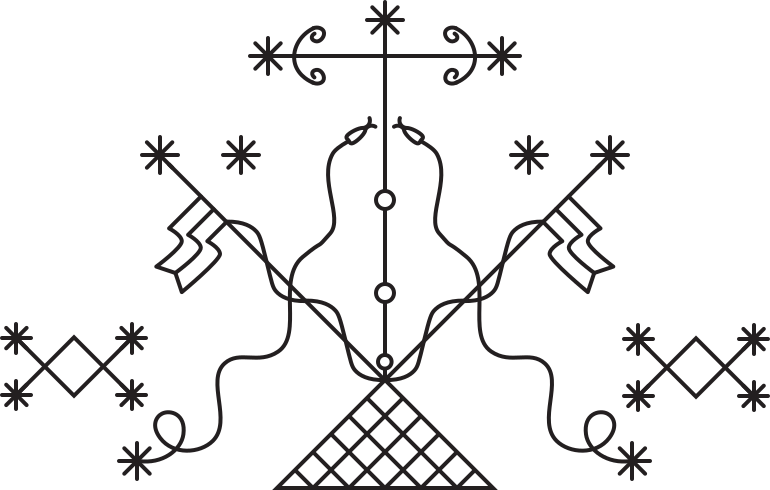


Damballah Wedo
Haitian Vodou
Father of All Loa
Serpent of Creation, Purity, Wisdom, and Renewal
The first loa Bondyè created was Damballah. As he slithered through the void of nothingness, he created the mountains, rivers, and valleys. His wife Ayida-Wedo followed him, providing water to the earth. After the initial creation, Damballah coiled around the earth to support it. His union with Ayida-Weda represents the balance of nature.
Damballah is the cosmic serpent who created the earth and the sky. He symbolizes rainbows, rivers, and the sky. The cosmic serpent’s origins come from Dahomey Vodun, going by Danh, to the Fon and Ewe people. Once worshippers arrived in the Caribbean, Haitian followers changed his name to Damballah Wedo.
He is married to Ayida-Wedo, a rainbow serpent representing the balance between masculine and feminine energy.
Attributes of Damballah Wedo
As the serpent of creation, Damballah formed the world through his slithering movements. Furthermore, he cradles the earth to maintain balance in the universe. In Haitian Vodou, his likeness sometimes takes the form of Saint Patrick.
Damballah Wedo symbolizes fertility and healing. Practitioners often call upon this loa to aid in spiritual, emotional, and physical healing. He represents the nurturing powers of life along with the cycle of birth and growth.
Damballah Wedo is a significant loa in Vodou cosmology. Likewise, he is responsible for creating the universe along with the life that resides within it. Humans, animals, plants, and even natural elements are all creations that stemmed from this loa.
In addition to creation and healing, Damballah Wedo is viewed as a protector of wisdom. He is the patron of elders and ensures oral traditions are passed down through generations. This sacred knowledge ensures traditions and culture are not lost with new generations.
Damballah Wedo’s Appearance
Damballah Wedo is portrayed as a white snake, often taking the form of a python. In some cases, he transforms into human form; however, this is uncommon. As a snake, he uses few words but generally communicates through hisses and whistles.
This loa is often visualized as a coiling snake, either around the Earth or by himself. In some hounfours (temples), he is stretched across altars. In essence, the connection of altars represents his connection between all living beings and the cosmos.
While Damballah Wedo’s appearance is that of a white snake, he often emits a shimmering aura. This aura portrays his connection to the cosmos.
Offerings
Offerings are made to Damballah to request peace, balance, and healing. Typically, these rituals occur near a river or a clean body of water. Purity is essential when conducting rituals for the serpent. Offerings include:
- Eggs – creation and renewal
- Milk – nourishment and purity
- Rice or flour – prosperity
- Coconuts or honey – the sweetness of the divine
- White flowers – peace
- Freshwater – purity
- Silver – wisdom
Symbols
Serpents are the main symbol of honoring Damballah Wedo. His favorite colors are white, blue, and silver. Furthermore, Thursday is the sacred day associated with Damballah.
Rituals and Worship
Rituals to worship Damballah Wedo commonly involve spirit possession. When this occurs, the possessed individual’s feet mustn’t touch the ground, so white cloth separates the feet from the earth.
Lighting white candles, laying white flowers, and placing offerings of eggs, milk, silver, or coconuts are essential to conducting rituals. Before the ritual begins, a practitioner pours a bowl of fresh water on an altar to symbolize purity.
Once possessed, a follower begins to move in snake-like patterns. Additionally, drummers accompany this with a slow rhythmic beat throughout the ritual. Followers leave offerings to Damballah in sacred and pure places, such as river banks, trees, or a crossroads.
A Prayer to Damballah Wedo
Damballah Wedo offers calm, pure energy for those who ask his favor. Traditionally, a vodouisant prays to this loa on Sundays. However, individuals also invoke this loa to seek guidance and clarity in times of hardship, and to cleanse spaces for spiritual work.
A common prayer to Damballah Wedo would sound like this:
Damballah Wedo, the Great Serpent of the sky and waters,
Weaver of the world, I call upon your white light to settle this space.
Grandfather Damballah, let your cool presence overcome us.
Bring stillness to my mind, as you soundlessly slink.
Help me shed what no longer serves me, as you shed your skin.
Swathe my home and heart with your protective coils,
And allow me to walk a path of wisdom, peace, and clarity.
Accept my humble offerings, as I proffer what I can.
And thanks be to you for the breath in my lungs, and life in my veins.
Stay with me in peace.
Ayibobo!